


The fermata is a musical symbol that is used to lengthen a note. Cocolí in El Calderón has Eva Guillamón as performer. The concept and music are by Sonia Megías….
Primo Pablo
2. Basic triads. Anatomy and comb
The triad chords are the basis of Western harmony. They emerge from combining the first notes from the the overtone series, which by default form a Major chord (rather a…
Ana Romero Flores and the indigenous struggle
Ana Romero Flores, representative of the indigenous struggle, tells us from Paraguay about the obstacles that her people find to be recognized and respected. Although the Constitution of the Republic…
“Oriental”
Oriental is Spanish Dance No. 2 by Enrique Granados, originally for piano. The Saxapil Quartet from Altea (Alicante) commissioned me years ago to arrange it for saxophone quartet, and here I share this beauty, which is part of various ensembles’ repertoire. This journey to Granados’ floating worlds is the second ArteSonía gift.
The original piano work is a delight, especially when performed by the great Rosa Torres-Pardo:
We’ll catch Rosa Torres-Pardo for the Palanca section, as she’s a very inspiring musician who has opened paths for all of us dedicated to music.
The Saxapil Quartet from Altea, responsible for today’s ArteSonía, was formed by Ignacio Solana (soprano), Alejandro Juarez (alto), Antoni J.Barber (tenor), and Felipe Zaragozí (baritone), all professors at local conservatories and teaching colleagues at the MUSA summer courses in Altea, directed by Felipe Zaragozí himself (the quartet’s baritone) where I taught composition and improvisation during the summers of 2014 and 2015. I liked Altea so much that I later lived there for a year, what a beautiful place…
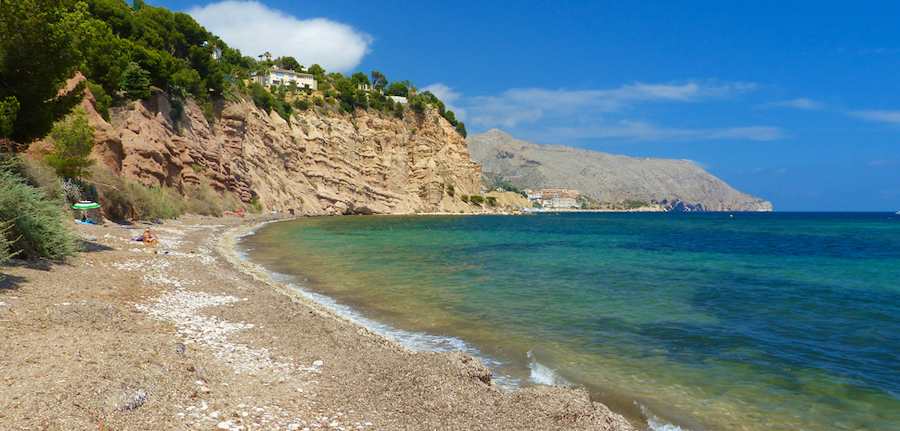
The arrangement of Oriental for saxophone quartet is from 2007 and plays with oriental scales, giving a slight twist to the original author’s approach to them. The soprano sax sometimes plays the role of snake charmer, or hypnotic melody, while the others also carry sinuous melodies that create a great sensation of weightlessness. Download the scores from these links:
Below you can listen to my arrangement performed by different ensembles:
Performance by Synthèse Quartet from Salamanca (2018):
Performance by Sax Ensemble from Madrid (2017):
Performance by Ilusax quartet from Madrid (2016):
Let me know if you perform it with your quartets! I’ll be delighted to hear you.
Poetry in Music: Sappho
This month, the ReSonance is generated by the great poet Sappho of Lesbos, brought to the stage by Cristina Rosenvinge, Marta Pazos, María Folguera, and a cast of powerful, joy-seeking…
Cocolí en “The Butterfly”
One of Dúa de Pel’s projects is Cocolí. It’s a character that connects us with simplicity, humor, and absurdity. This initiative began during a trip to the Azores Islands in…
1. The tonic and the dominant
The tonic as rest and the dominant as tension are the basic sensations in harmony. In this first session of LaGuitarradeSofía, we’ll work with a song as simple as Mi…
Literature: Progressing Adequately
The book Many Lives, Many Masters by New York psychiatrist Brian Weiss poetically develops, in a novel-like way, some advice for proper progress – that is, living in harmony with…
Irma Saiz and mathematics
Irma Saiz, mathematics teacher, creator of many of the math books used today in Argentinean schools, tells us about her motivation to make young people fall in love with her…
Regálame esta noche
Coro SMA + piano
Regálame esta noche, by Roberto Cantoral. An arrangement of my favorite bolero for three-part choir and piano is the ArteSonía giveaway in the first issue of LaVidaenMúsica.
Something that I enjoy is arranging works that I like, to understand their guts, the process, the crossword puzzle, and to take them down parallel paths in which I learn a lot. I especially love doing choral arrangements, and in this issue I give you one for three-part choir and piano that I did for the Fulbright Choir. Download the sheet music from these links:
General Score | Choir Sheet Music
The Fulbright Choir was a project I founded in 2014 with the support of the Fulbright Association and the Fulbright Commission to receive scholarship recipients who came from the United States to spend an academic year in Madrid. It lasted six years, gave me many joys and brought into my life treasures of people who have already stayed in my life. Unfortunately, it died out due to Covid-19, like so many other vocal groups.
Regálame esta noche, written by Mexican composer Roberto Cantoral (1935-2010), has heartbreakingly romantic lyrics:
No quiero que te vayas,
la noche está muy fría,
abrígame en tus brazos
hasta que vuelva el día…
Tu almohada esta impaciente
de acariciar tu cara,
tal vez te dé un consejo,
tal vez no diga nada.
Mañana muy temprano
platicarás conmigo
y si estás decidida
a abandonar el nido…
Entonces será en vano
tratar de retenerte,
regálame esta noche,
retrásame la muerte.
The video is from January 2020, the last concert of the choir, directed by the Venezuelan Alicia Rivero and with me at the piano. It took place in what was our home since the formation of the group: the paraninfo of the Instituto Internacional Americano en Madrid.
Vídeos de estudio Regálame esta noche
Tutte
Voz de soprano
Voz de mezzo
Voz de alto
I hope you enjoy it and keep me posted if you prepare it with your choirs!
Horizonte, videoclip by Mariola Olcina
Our friend and fan Mariola Olcina, documentary filmmaker, offered to make us this original video clip through the streets and rooftops of the Madrid neighborhood of La Latina, mixing animation…
You must be logged in to post a comment.