At section ReSonancia the figure of Newyorker Composer John Zorn, founder of ‘The Stone’, that was located at Avenue B, close to the house where I lived during academic year 2010-11. I’d go there every Monday for months, and in it I met fundamental people in my life in New York, such as Brazilian singer…
2026’II’19 · Swimming in New York
You never know what the consequences of a decision might be. Swimming in New York can be a great adventure, just like anything else here. But as the Mesopotamian gods of Pèladan say in their Chaldean pastoral poem The Son of the Stars: “Will is the strongest of all forces.” Let’s see what happens when…
2026’II’23 · Snow and Kindness
In a society that give “the power” to the most evil beings imaginable, and where “politics” does not mean ensuring shelter and sustenance for the people but rather the exact opposite, the purity of snow, music, and good deeds sheds light—and offers hope. What else do we have left? Picture from la Casita’s window It’s…
Pauline Viardot-García (1821-1910)
by Patricia Kleinman Pauline Viardot-Garcia (Paris, 1821- 1910) was one of the most influence figures in the european culture in the second half of the 19th century. She was not only one of the most famous opera singers of her time, which a career that spaneed a wide range of repertories and styles, but also…
Beatriz Alcaine: The Moon in the Earth
I know very few people as brave and vital as Beatriz. She´s a fighter who embraces a life of constant reconstruction, rebirth, resolution and resurrection. Doors that open, paths that lead to horizons where loving people she may not yet know await for her. This is Beatriz´s life. Now in Porto (Portugal), where she moved…
Cocolí in “El calderon”
The fermata is a musical symbol that is used to lengthen a note. Cocolí in El Calderón has Eva Guillamón as performer. The concept and music are by Sonia Megías. Together they make up Dúa de Pel.. https://vimeo.com/758826125/c30bb5aa2f?share=copy…
2. Basic triads. Anatomy and comb
The triad chords are the basis of Western harmony. They emerge from combining the first notes from the the overtone series, which by default form a Major chord (rather a Just Chord). In LaGuitarradeSofía of this month we will learn the basic triads and perform exercises with them. One of the exercises will be the…
Ana Romero Flores and the indigenous struggle
Ana Romero Flores, representative of the indigenous struggle, tells us from Paraguay about the obstacles that her people find to be recognized and respected. Although the Constitution of the Republic of Paraguay includes basic rights for indigenous people, they suffer constant evictions and a large number live literally on the soils of Asunción, the capital,…
“Oriental”
Oriental is Spanish Dance No. 2 by Enrique Granados, originally for piano. The Saxapil Quartet from Altea (Alicante) commissioned me years ago to arrange it for saxophone quartet, and here I share this beauty, which is part of various ensembles’ repertoire. This journey to Granados’ floating worlds is the second ArteSonía gift.
The original piano work is a delight, especially when performed by the great Rosa Torres-Pardo:
We’ll catch Rosa Torres-Pardo for the Palanca section, as she’s a very inspiring musician who has opened paths for all of us dedicated to music.
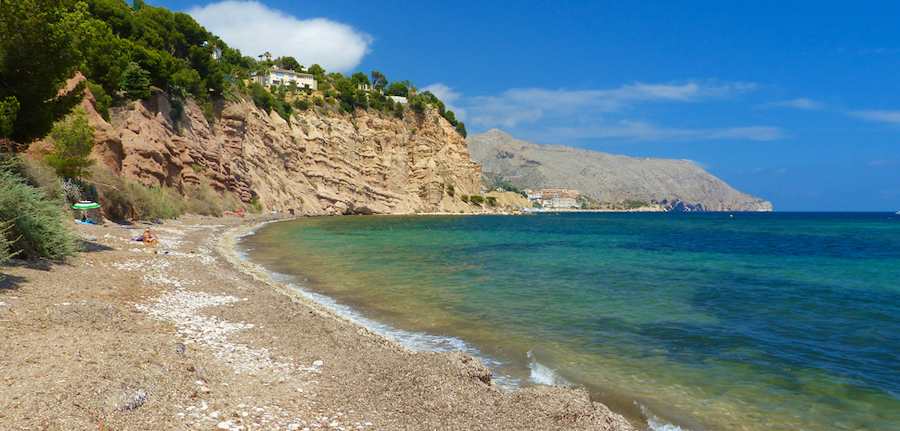
The Saxapil Quartet from Altea, responsible for today’s ArteSonía, was formed by Ignacio Solana (soprano), Alejandro Juarez (alto), Antoni J.Barber (tenor), and Felipe Zaragozí (baritone), all professors at local conservatories and teaching colleagues at the MUSA summer courses in Altea, directed by Felipe Zaragozí himself (the quartet’s baritone) where I taught composition and improvisation during the summers of 2014 and 2015. I liked Altea so much that I later lived there for a year, what a beautiful place…
The arrangement of Oriental for saxophone quartet is from 2007 and plays with oriental scales, giving a slight twist to the original author’s approach to them. The soprano sax sometimes plays the role of snake charmer, or hypnotic melody, while the others also carry sinuous melodies that create a great sensation of weightlessness. Download the scores from these links:
Below you can listen to my arrangement performed by different ensembles:
Performance by Synthèse Quartet from Salamanca (2018):
Performance by Sax Ensemble from Madrid (2017):
Performance by Ilusax quartet from Madrid (2016):
Let me know if you perform it with your quartets! I’ll be delighted to hear you.
Poetry in Music: Sappho
This month, the ReSonance is generated by the great poet Sappho of Lesbos, brought to the stage by Cristina Rosenvinge, Marta Pazos, María Folguera, and a cast of powerful, joy-seeking women. An explosive, fresh, stimulating, fun Sappho, filtered through current technologies and exquisite aesthetic taste… A true overflow of talent and deep scenic work. Brava….
Cocolí en “The Butterfly”
One of Dúa de Pel’s projects is Cocolí. It’s a character that connects us with simplicity, humor, and absurdity. This initiative began during a trip to the Azores Islands in 2016, where we recorded the first videos. https://player.vimeo.com/video/741426169?h=a25bd49a5c&badge=0&autopause=0&player_id=0&app_id=58479 Cocolí features Eva Guillamón as the performer. The concept, camera work, music, and editing are by Sonia…
1. The tonic and the dominant
The tonic as rest and the dominant as tension are the basic sensations in harmony. In this first session of LaGuitarradeSofía, we’ll work with a song as simple as Mi limón mi limonero (My Lemon Tree), by Venezuelan composer Henry Stephen, which uses only these two chords: tonic (I degree) and dominant (V degree): https://player.vimeo.com/video/741424937?h…