Chelva’s Mysteries
Dear people,
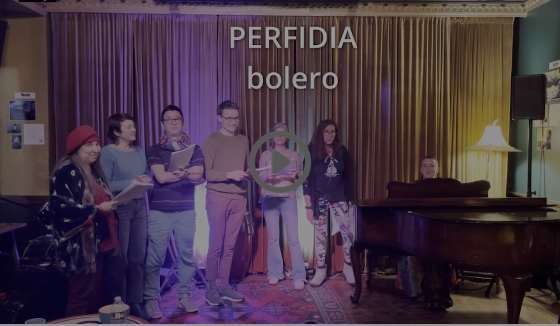
How are you coping with the heat? In the Valencian mountains you can live in a house without fans or air conditioning because there’s corrientica (breeze), as we commonly say. There’s also a river! And good people to have a drink with and make music together. That’s what we did some nights ago at Charco Street (actually a square), playing and singing.
Thanks to Peter Bosch and Gemma Luz Bosch on the piano and other strange instruments, Laura Giménez on cello, Heidi Erbrich on violin, Jojo for documenting, and the rest of musical beings in the area.
I didn’t write an AltaVoz in July because I was landing from Manhattan, putting my pieces together, and I also took a quick trip to Galicia to visit some friends. I ended up singing on a boat with the great Rosa Torres-Pardo and having lunch in a small port with my friend Mary from New York and two nieces of Federico García Lorca: Gloria and Isabel.
You never know what fate has in store!
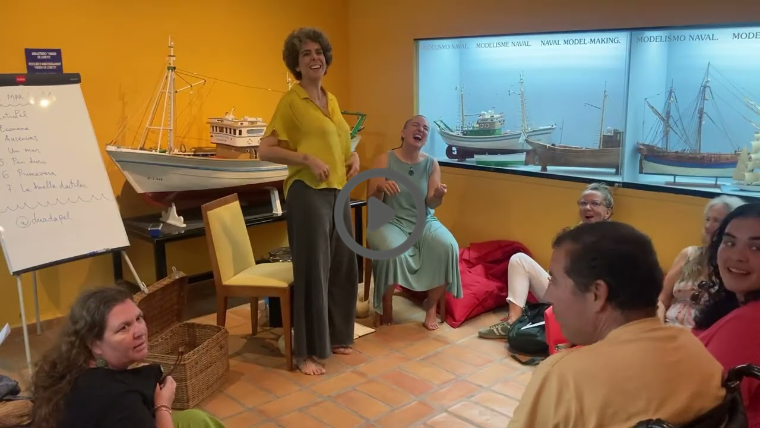
Last fall 2025, Dúa da Pel performed a ten-Wednesday series at the Museo del Mar in Santa Pola (Alicante), located in an astonishing 16th-century castle. At each mini-concert, we presented a program of about 40 minutes, and the audience voted for their favorite song to be repeated at the following concert.
We’re sharing them on AltaVoz so you can enjoy them from home.
Here you have the third one!
Journalist Antonio Ródenas always welcomes me warmly to his program “Almansa en vivo” (in Spanish). This time he asks me about my latest projects in New York City.
The piece Lentitude is the Composer’s Commission 2025 from the Foundation for Iberian Music in New York, which is part of the City University of New York (CUNY) and is directed by musicologist Antoni Pizà, who has also been my mentor at this same university during my research on expanded notations during the first half of 2026.
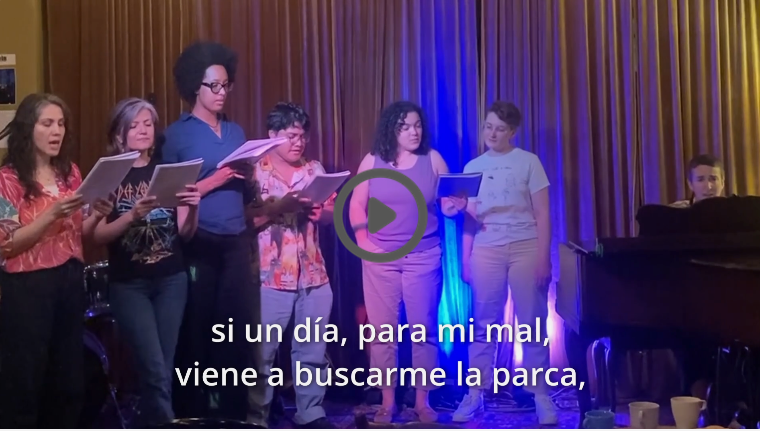
The piece, dedicated to Antoni and to my dear Rosa Torres-Pardo, features a text by the Galician poet María Alonso Espasandín: her beautiful Tríptico da lentitude (Triptych of Slowness), which you can read along to karaoke-style while listening to the piece. The meaning I wanted to keep was that of the text: contemplation, patience, the fabric of life.
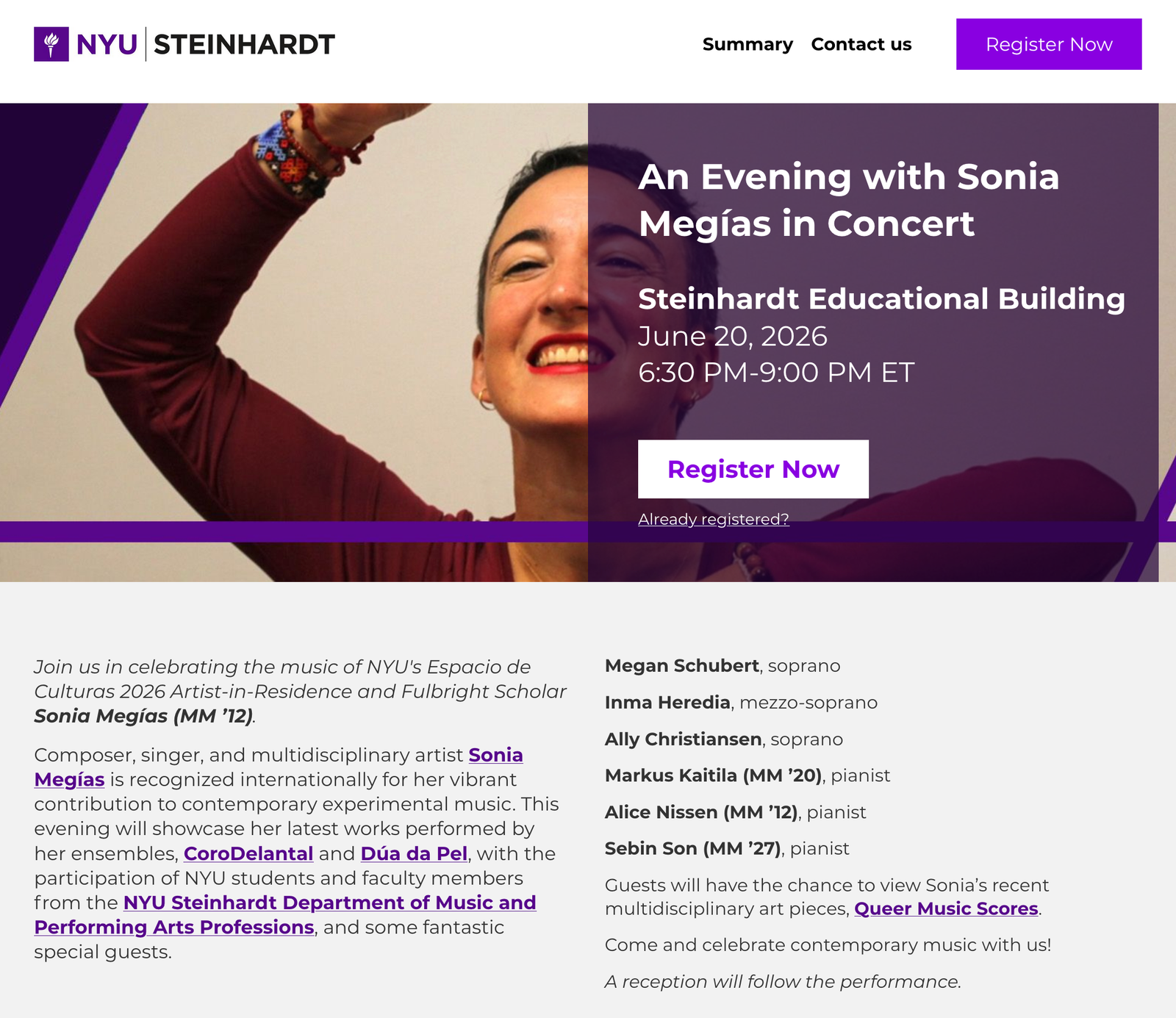
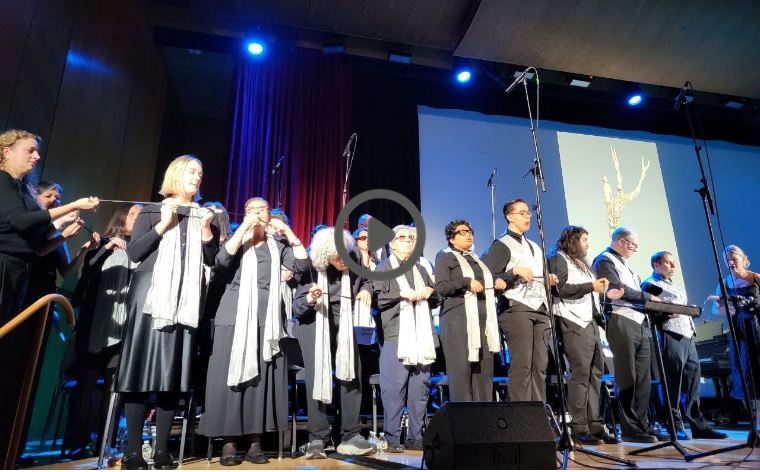
The CoroDelantal NYC, directed by Natalie Plaza this time and with Markus Kaitila on piano, performed in the concert-tribute that NYU made to my career as a composer on past June 20th.
The life of a woman composer, like that of any freelance female artist, is always observed with curiosity by the rest of humankind. Even I’m surprised and grateful by how lucky I am to create music and that this is my job, every single day!
What’s happening now? Until the end of September, I’m living in Chelva, thanks to the insistence of sound artists Peter and Simona, the owners of the artist residency where I’m staying for these three months—a house at least 500 years old near the Muslim Benacacira neighborhood. Chelva is a small mountain village equidistant from Valencia, Teruel, and Cuenca. A beautiful place, a treasure trove of heritage and nature. Living with my cats, Petra and Amaro. Composing to live, not just to earn money, but to gain life, or to surrender myself to life.
It’s quite funny that this town, like other small villages, has a town crier’s announcement that’s broadcast from the church loudspeakers. It starts with a pasodoble in F major, and then they make the day’s announcements. The church bells especially mark the important hours of the day: 8 a.m., noon, and 8 p.m. Thanks to them, I know what time it is without looking at a clock!
I still haven’t had a television for over 20 years; I barely watch series or movies either; I don’t use a microwave, and I hardly ever use YouTube except to upload my own videos. The washing machine in this house must be as old as me, or older! And the spin dryer looks like a salad spinner—how amusing. The house is quiet; I almost only hear swifts, doves, church bells, and an occasional brush cutter used at the close countryside…
I feel very focused! I’ve recently finished two pieces:
- Dido’s Quejío (quejío is a Flamenco lament) for singing cellist and piano, a 50th birthday gift for my old friend Laura Giménez Díaz, which will premiere next Saturday in Jaén. It is a Flamenco fantasy on Henry Purcell’s famous Dido’s Lament.
- De mi pecho (From My Chest), for singing violist, a piece I needed to compose to heal my heart. I sent this piece to my other old friend Alicia Calabuig so she can try it out and work on it with a student in her summer courses or at the Royal Conservatory of Music in Madrid. I’m so proud of Alicia to be the viola teacher at such a prestigious institution!
I’m currently working mainly on three other pieces:
- The CoroDelantal anthem, to celebrate our 15th anniversary. A conceptual and rather mathematical piece for four equal voices. How is it possible that we still don’t have an anthem after so many years of mischief? So, that’s what I’m finding a solution to.
- A piece for flute and piano, Amor por alegrías (Love for Joys), dedicated to fantastic musicians Isabel Dobarro and her husband Rubén Torres for their wedding. It’s a slow-cooked piece; I’ve been working on it for two years, but we’re finally seeing the light at the end of the tunnel!
- A commission from composer Carlos Izquierdo for his wonderful orchestral project at Tabarca Island next spring. Carlos Izquierdo is one of those treasures I discovered in Alicante; we’ve been artists-in-residence at the MACA (Museum of Contemporary Art of Alicante) together for five years.
Regarding the exhibitions of my Queer Music Scores, two very exciting opportunities are opening up, and the best part is that they’re not set to expire!
- Firstly, the Fonoteca Valenciana (Valencia Sound Archive), directed by Rubén García, will have my carefully preserved pieces available for consultation by researchers and curious individuals starting this coming September—with gloves, of course! That way, I won’t damage them too much with the moves of my nomadic life.
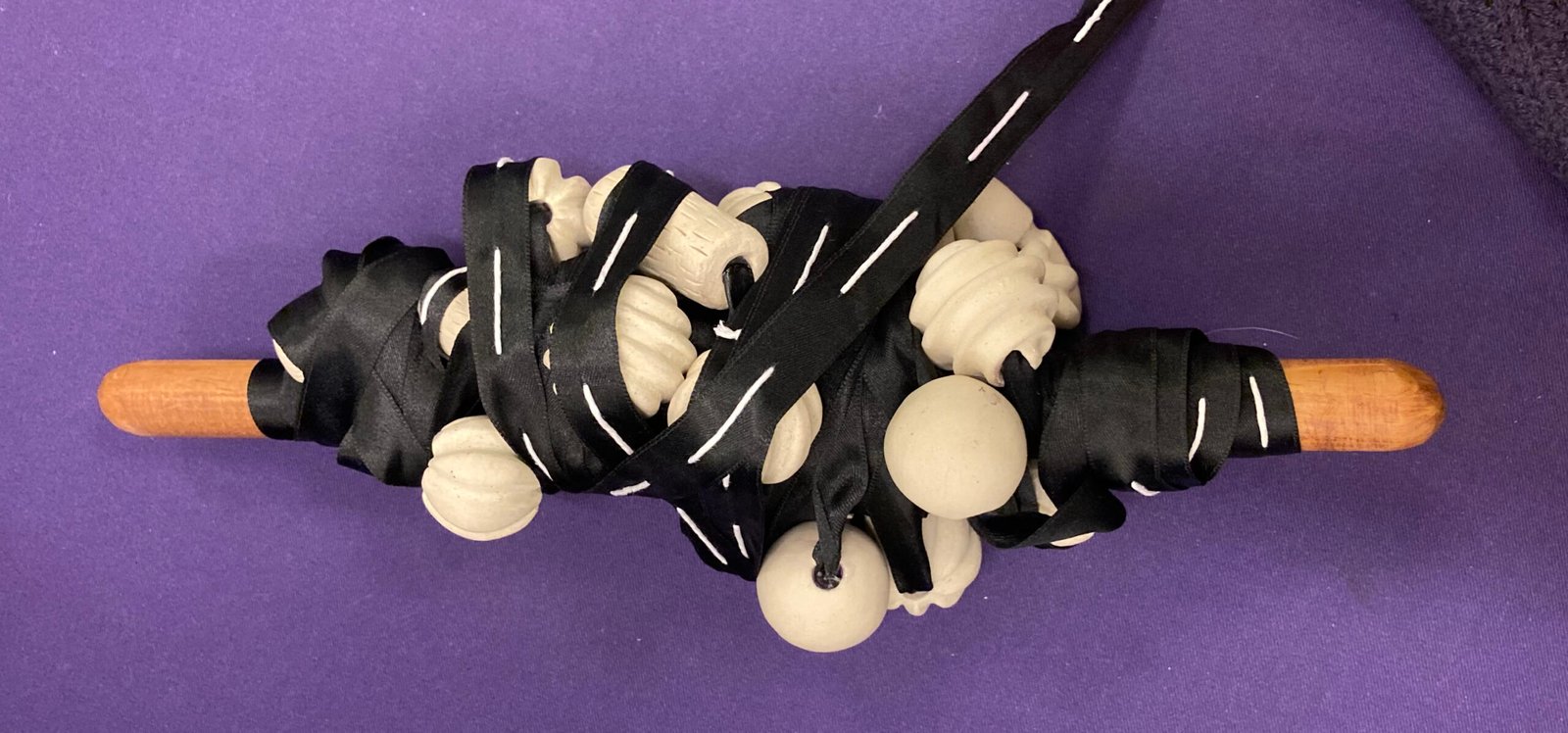
- Secondly, the national headquarters of CEAPAT-IMSERSO, with whom I continue to collaborate on the creation of tactile scores for blind people to perform experimental music, has requested five copies of my spherical score made of raw clay, SferaSpiriS, for use in sensory guided tours for blind or visually impaired people. Starting in September, the scores will be on display at their Madrid headquarters.
Every day is a new adventure! Among these things, writing my doctoral thesis, walking around the town and surrenders and preparing for the season of rehearsals, concerts and various events… I am very, very busy!
Concert of Ensemble Mediterráneo, made by Laura Giménez (voice and cello) and Rocío Hernández (electric piano), in which they premiere my Flamenco fantasy on Henry Purcell’s Dido’s Lament, dedicated to Laura Giménez for her 50th birthday.
CoroDelantal Madrid starts it’s activity with this performance along Lavapiés central neighborhood, starting by my first address in the city (in 2005) with a sense of rememberance or happy reconnection. Harmonic Processions are musical interventions of the public space by only using the perfect 5th made from pitches G and D.
Come with your voice or instrument!
Ensemble Someal, conducted by soprano Sylvia Nopper, sings my arrangement of Galician song Deusa Antiga as part of their concert ‘Der Klang des Unsichtbaren’ (The Sound of the Unseen).
You can get the score of this arrangement from this link.
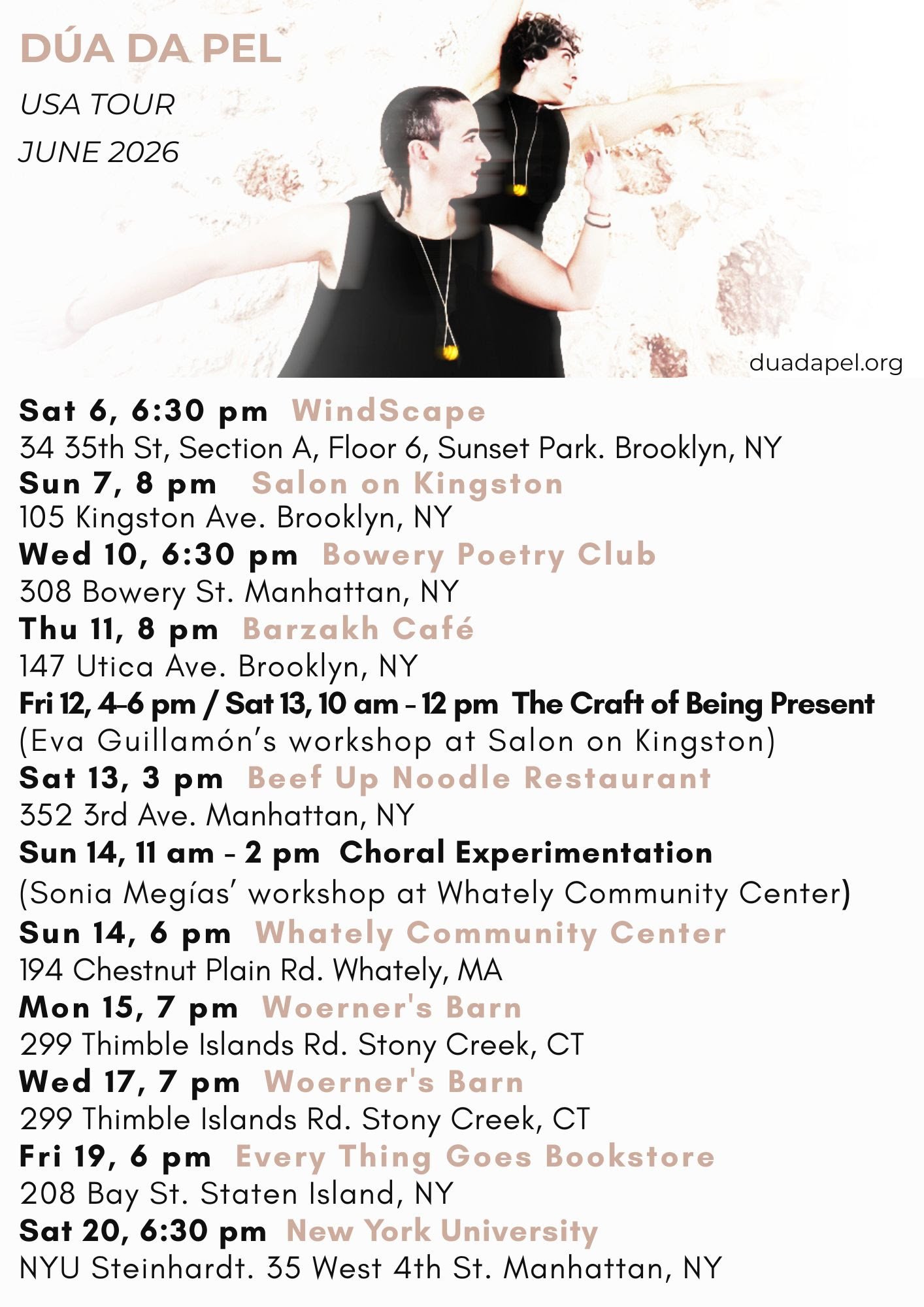
Dúa da Pel has been invited for the third time by the MH University to share a concert with our audience in Elche the new songs and versions that we premiered at our last USA Tour, with and without instruments.
Come on, come on, they’re flying off the shelves!
Are you looking for repertoire for your students?
Or do you want to give a score to your musician friend?
Perhaps you sing in a choir and are tired of the repertoire?
Share the scores from EdicionesDelantal with whomever you like.
All pieces include audio, sometimes performance videos,
photos of the setup, and other stories of the composition processes…